
What are the Ten Mahāvidyā? The meaning of the tantric goddesses
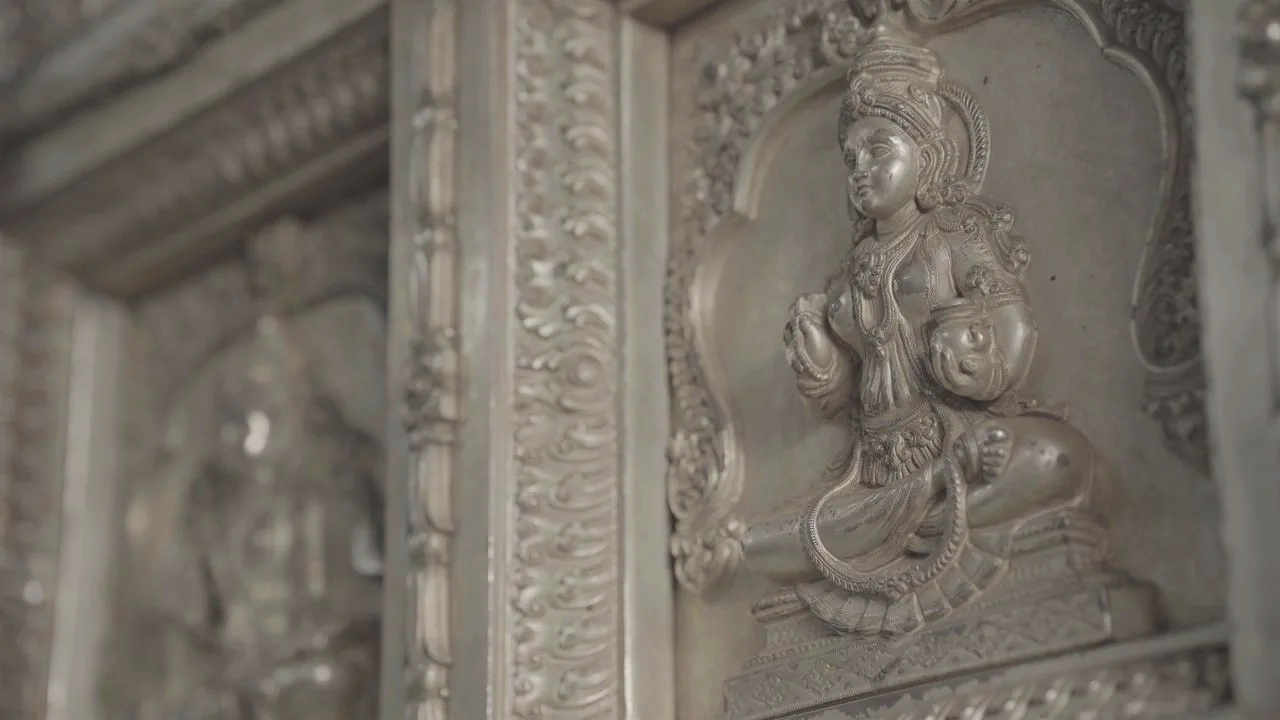
The Daśa Mahāvidyā are ten yogic and tantric goddesses who represent cosmic powers, states of consciousness, and the progressive stages of Kuṇḍalinī awakening. In the tantric tradition, these deities serve as energetic maps, guiding the practitioner from the primordial darkness of time to the radiant bliss of embodied liberation.
Below, we explore the essence and meaning of each Mahāvidyā:
Kālī: The dark one
Also known as Ādi Śakti, Kālī is both the womb and the tomb. As the power (Śakti) of time (Kāla), she possesses the absolute capacity to devour and transform all things. Kālī is the greatest force of liberation, and all other Mahāvidyās are understood to be forms of her.
Tārā: The guiding star
In tantric cosmology, Tārā is the very first vibration of sound—the initial movement into manifestation known as Praṇava Mantra (OṂ) or Spanda. As the "Guiding Star," she represents both the teacher and the sacred mantra, possessing the power to carry the seeker across the ocean of Saṃsāra. She is often depicted with a protruding belly, symbolizing her state of being "pregnant" with the entire cosmos.
Lalitā Tripura Sundarī: The playful beauty of the three worlds
The charming beauty whose bliss permeates every level of consciousness. Within the tantric map, she represents Icchā Śakti—the power of divine will or desire. She is the sacred urge of the Absolute to create something out of oneself, manifesting as the playful beauty found within the three worlds.
Bhuvaneśvarī: The ruler of the world
She is the manifest world itself, as well as the infinite space that holds all creation. As the material realm, she is known as Prakṛti and is associated with the five great elements and their subtle essences (Tanmātra).
Tripura Bhairavī: The terrible one in the three worlds
She is the power (Śakti) of action, known as Kriyā, and the fierce force of Tapas (spiritual heat or austerity). Bhairavī represents the friction and heat necessary for creation, as well as the necessary restrictions and limitations required for both creative and spiritual mastery.
Chinnamastā: The one who cuts her own head
An image of creation cut off from the remembrance of its true source, she leads the practitioner back to identification with the Absolute. She symbolizes life feeding off death, the mastery of sexual energy for spiritual progress, the awakened Kuṇḍalinī, and the enlightened teacher capable of granting Śaktipāta.
Dhūmāvatī: The one who is made out of smoke
Known as the eldest form of Kālī and a widow, she represents Śūnya (the void). Dhūmāvatī is creation disconnected from consciousness; she teaches through loss, disappointment, and humiliation. She meets us in the "standstill" moments of life, granting us the capacity to be liberated from all worldly attachments.
Bagalāmukhī: The one who has the face of a crane
She is the Great Silence—the sacred pause before movement. Often depicted holding the tongue of a demon, she grants the practitioner stillness of mind. Strongly associated with the color yellow, she represents the promise of newly awakened creativity and leads the seeker to the Madhya (the space in between), the midline of the body known as Suṣumṇā.
Mātaṇgī: The daughter of the sage Mātaṇga
Mātaṇgī is the dharmic expression of creativity and the divinely inspired spoken word (Vaikharī). From the lens of the spiritual journey, she represents the individual expression of a Kuṇḍalinī that has united with Śiva and returned down into embodied liberation. As the "outcast goddess," she holds the power to digest what was previously indigestible to us.
Kamalā: The one who is like the lotus
The final stage of the journey, Kamalā represents embodied liberation and an auspicious state of mind. As the goal of spiritual practice, she is the beauty of the material world seen through the eyes of the divine. She allows us to look upon all of existence with the gaze of unconditional love.